Monday, March 7, 2016

SnapVault vs SnapMirror

SnapVault vs SnapMirror

The key to understanding the difference is really understand the sentence: Snapvault is a backup solution where snapmirror is a DR solution.
What does it mean that SnapVault is a backup solution?
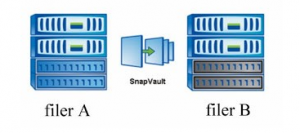
Let me bring some picture to help me explain:
SnapVault
Example has few assumptions:
  • we’ve got filerA in one location and filerB in other location
  • that customer has a connection to both filerA and FilerB, although all shares to customers are available from filerA (via CIFS, NFS, iSCSI or FC)
  • all customer data is being transfered to the filerB via Snapvault
What we can do with snapvault?
  • as a backup solution, we can have a longer snapshot retention time on filerB, so more historic data will be available on filerB, if filerB has slower disks, this solution is smart, because slower disk = cheaper disks, and there is no need to use 15k rpm disk on filer that is not serving data to the customer.
  •  if customer has an network connection and access to shares on filerB he can by himself restore some data to filerA, even single files
  • if there is a disaster within filerA and we loose all data we can restore the data from filerB
What we cannot do with snapvault?
  • In case of an disaster within filerA we cannot “set” filerB as a production side. We cannot “revert the relationship” making the qtree on filerB as a source, and make them read/write. They are snapvault destinations so they are read-only.
  • (having snapmirror license available on filerB we can convert Snapvault qtree to snapmirror qtree which solves that ‘issue’)
What does it mean that SnapMirror is a DR solution?
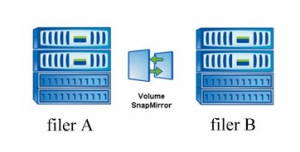
Again, let me bring the small picture to help me explain:
SnapMirror
Example has few assumptions:
  • we’ve got filerA in one location and filerB in other location
  • that customer has a connection to both filerA and FilerB, although all shares to customers are available from filerA
  • all customer data is being transfered to the filerB via snapmirror
What we can do with snapmirror?
  •  As a backup solution we can restore the accidentally deleted, or lost data on filerA,  if the snapmirror relationship has not been updated meantime
  • If there is some kind or issue with filerA (from a network problem, to a total disaster) we can easily reverse the relationship. We can make the volume or qtree on filerB, as a source, and make it read-write, provide an network connection to the customer and voila – we are back online! After the issue has been solved we can resync the original source with changes made at the destination and reverse the relationship again.


Wednesday, February 3, 2016

Data protection methods

Data protection methods
Data ONTAP provides multiple methods for protecting your data.
Snapshot copy
Make point-in-time copies of a volume.
volume copy command
Perform fast block-copy of data from one volume to another.
FlexClone LUNs (FlexClone license required)
Point-in-time, writable copies of another LUN in an active volume or in a Snapshot copy. A clone and its parent can be modified independently without affecting each other.
SnapVault backups (SnapVault license required)
  • Back up data by using Snapshot copies on the storage system and transferring them on a scheduled basis to a secondary storage system.
  • Store these Snapshot copies on the secondary storage system for weeks or months, allowing recovery operations to occur nearly instantaneously from the secondary storage system to the original storage system.
Data protection mirror copies (SnapMirror license required)
  • Replicate data or asynchronously mirror data from one storage system to another over local or wide area networks (LANs or WANs).
  • Transfer Snapshot copies taken at specific points in time to other storage systems.
These replication targets can be in the same data center through a LAN, or distributed across the globe connected through metropolitan area networks (MANs) or WANs. Because SnapMirror operates at the changed block level instead of transferring entire files or file systems, it usually reduces bandwidth and transfer time requirements for replication.
SnapRestore (license required)
  • Restore a LUN or file system to an earlier preserved state in less than a minute without rebooting the storage system, regardless of the size of the LUN or volume being restored.
  • Recover from a corrupted database or a damaged application, file system, LUN, or volume by using an existing Snapshot copy.
SnapDrive for Windows or UNIX (SnapDrive license required)
  • Manage storage system Snapshot copies directly from a Windows or UNIX host.
  • Manage storage (LUNs) directly from a host.
  • Configure access to storage directly from a host.
Note: For more information about SnapDrive as well as the supported Windows and UNIX environments, see the SnapDrive for Windows Installation and Administration Guide or SnapDrive for UNIX Installation and Administration Guide.
Native tape backup and recovery
Data ONTAP supports native tape backup and recovery. Support for most existing tape drives is included, as well as a method for tape vendors to dynamically add support for new devices. In addition, Data ONTAP supports the Remote Magnetic Tape (RMT) protocol, enabling backup and recovery to any capable system. For more information about tape backup and recovery, see theData ONTAP Data Protection Tape Backup and Recovery Guide for 7-Mode.
NDMP

Control native backup and recovery facilities in storage systems and other file servers. Backup application vendors provide a common interface between backup applications and file servers.

Tuesday, January 19, 2016

VFILER LAB How to

 VFILER LAB


Use the FAS3170 Simulator for this LAB.
# Use the console, or telnet/ssh to 10.130.10.102 
1. Create a vfiler called test
•   fas3170> vfiler create test -s ipspace1 -i 10.130.10.105 /vol/fas6080a_vfiler1_root  
/vol/fas6080a_vfiler1_nas /vol/fas6080a_vfiler1_san  
•   use .105 address 
•   use ns1 interface 
•   use “netapp” password 
•   don’t set anything else up. ..no dns, no nis, CTRL-C cifs setup
2. Show vfiler status
•   fas3170> vfiler status
•   fas3170> vfiler status -a
3. Rename vfiler
•   fas3170>  vfiler rename test fas3170_vfiler1
•   fas3170> vfiler status
4. VFILER LIMIT (how many vfilers on the system)
NOTE: to increase this value, you must reboot for it to take effect.  Limits are based on memory.  In 
failover mode, a node can handle double the vfilers to handle the cluster partner.  The simulator is 
limited to 5 and defaults to 5. 
–  FAS Controllers with <1GB RAM    11 max vFilers  
–  FAS Controllers with >=1GB RAM  26 max vFilers  
–  FAS Controllers with >=2GB Ram  65 max vFilers  
•   fas3170>  vfiler limit  # show it is set to 5 and 2 are in use 
•   fas3170>  vfiler limit 4 # change to 4 
•   fas3170>  vfiler limit  # show change of 45. Allow and Disallow Protocols per vfiler
•   Show all protocols (by default all are enabled) but requires base license in vfiler0 to use a 
protocol 
o   fas3170>  vfiler status -a 
•   Disallow rsh, ftp and http 
o   fas3170>  vfiler disallow fas3170_vfiler1 proto=rsh proto=ftp proto=http 
o   fas3170>  vfiler status -a   # confirm
•   Allow FTP 
o   fas3170>  vfiler allow fas3170_vfiler1 proto=ftp 
o   fas3170>  vfiler status -a   # confirm
6. vfiler run and vfiler context
•   vfiler context – go into the vfiler context itself 
o   fas3170> vfiler context fas3170_vfiler1       # notice the prompt change 
o   fas3170_vfiler1@fas3170> vol status
o   fas3170_vfiler1@fas3170> vfiler context vfiler0     # go back to vfiler0 
•   Run a command directly to a vfiler 
o   fas3170> vfiler run fas3170_vfiler1 vol status 
•   Run a command to ALL vfilers 
o   fas3170> vfiler run * vol status 
7. Stop and Start a vfiler
•   fas3170> vfiler stop fas3170_vfiler1 
•   fas3170> vfiler start fas3170_vfiler1 
8. Destroy a vfiler
•   fas3170> vfiler stop fas3170_vfiler1 
•   fas3170> vfiler destroy fas3170_vfiler1   # NOTE: Volumes go back to vfiler0 – enter “YES” to
confirm
•   fas3170> vfiler status -a 
9. Recreate the vfiler (you only need the root volume name to recreate if it was a vfiler before)
•   fas3170>  vfiler create fas3170_vfiler1 -r /vol/fas6080a_vfiler1_root -b fas3170_vfiler1 
o   NOTE: We didn’t specify the other 2 volumes that were in the vfiler, but they are 
added back 
   fas3170> vfiler status -a 
10. Create another vfiler (fas3170_vfiler2) and move volumes between vfilers
 •   fas3170> vfiler create fas3170_vfiler2 -s ipspace1 -i 10.130.10.106 
/vol/fas6080b_vfiler1_root  /vol/fas6080b_vfiler1_nas /vol/fas6080b_vfiler1_san   
•   use .106 address 
•   use ns1 interface 
•   use “netapp” password 
•   don’t set anything else up. ..no dns, no nis, CTRL-C cifs setup
11. FlexClone a fas3170_vfiler2 volume and add that clone to fas3170_vfiler1
•   fas3170>  snap create fas6080b_vfiler1_nas clone_snap
•   fas3170>  vol clone create fas6080b_vfiler1_nas_clone -s none -b fas6080b_vfiler1_nas 
clone_snap
•   fas3170> vfiler run * vol status  # show volumes (clone is only in vfiler0) 
•   fas3170>  vfiler status -a  #  show volumes in vfilers (but not vfiler0) 
•   fas3170>  vfiler add fas3170_vfiler1 /vol/fas6080b_vfiler1_nas_clone
•   fas3170>  vfiler status -a  # show volumes…clone is now in vfiler1 
12. Move the source of the cloned Volume from fas3170_vfiler2 to fas3170_vfiler1
•   fas3170>  vfiler move fas3170_vfiler2 fas3170_vfiler1 /vol/fas6080b_vfiler1_nas
•   fas3170>  vfiler status -a13. Remove a volume from a vfiler1  and it goes back to vfiler0, then add back to vfiler2 (same as 
move but to show remove and add function)
•   fas3170>  vfiler remove fas3170_vfiler1 /vol/fas6080b_vfiler1_nas_clone 
•   fas3170> vfiler run * vol status 
•   fas3170>  vfiler status -a 
•   fas3170>  vfiler add fas3170_vfiler2 /vol/fas6080b_vfiler1_nas_clone 
•   fas3170> vfiler run * vol status
•   fas3170>  vfiler status -a
14. Destroy vfiler1 and add all it’s resources to vfiler2 (both IP and volumes)
•   fas3170>  vfiler stop fas3170_vfiler1 
•   fas3170>  vfiler destroy fas3170_vfiler1  # confirm “YES” 
•   fas3170>  vfiler add fas3170_vfiler2 -i 10.130.10.105 /vol/fas6080a_vfiler1_san 
/vol/fas6080a_vfiler1_nas /vol/fas6080b_vfiler1_nas 
•   fas3170>  vfiler status -a 
15. Remove an IP and volume from vfiler2
•   fas3170>  vfiler remove fas3170_vfiler2 -i 10.130.10.105 
•   fas3170>  vfiler remove fas3170_vfiler2 /vol/fas6080a_vfiler1_san
•   fas3170>  vfiler status -a 16. Use “setup” to Modify IP/DNS/NIS/administrator hostname ip/root password  for a vfiler with the 
setup command (see alternate methods) - Setup will wack many setup files so be careful to 
restore from .bak if needed. 
•   **** NOTE: You can ifconfig a new interface or ifconfig alias an existing interface from vfiler0, 
or run “vfiler run vfilername setup -e interface:ip:subnet”.  Setup will wack several setup files 
(hosts, hosts.equiv, resolv.conf, exports, nsswitch.conf) so be careful to restore from .bak if 
needed.  Setup -e will create an alias if the interface is already in use.
a.   IP    [-e <ifname>:<ipv4 address | [ipv6 address]>:<netmask | prefixlen>,...] # 
alternatively use “ifconfig” which can do the same without wacking setup files..you must 
add the ip with “-i” though 
i. fas3170> vfiler add fas3170_vfiler2 -i 10.130.10.225 
ii. fas3170> vfiler status -a  
iii. fas3170> vfiler run fas3170_vfiler2 setup -e ns1:10.130.10.225:255.255.255.0 
1. confirm /etc/rc of vfiler0 has the correct ip
iv. fas3170> vfiler status -a  
b.   DNS  [-d <DNS domain name>:<DNS server ipv4 address | [DNS server ipv6 
address]>:...]  # alternatively…manually set “options dns” and update resolv.conf 
i. fas3170> vfiler run fas3170_vfiler2 setup -d 
insight.com:10.130.10.2:10.130.10.3 
1. confirm “vfiler run fas3170 options dns” and “rdfile 
/vol/fas6080a_vfiler1_root/etc/resolv.conf”
c.   NIS   [-n <NIS domain name>:<NIS server ipv4 address | [NIS server ipv6 address]>:...] 
# alternatively change “options nis” settings in the vfiler 
i. fas3170> vfiler run fas3170_vfiler2 setup -n 
netapp.nis:10.130.10.2:10.130.10.3 
1. confirm “vfiler run fas3170 options nis”
d.   Administrator Host Name and IP  [-a <ipv4 address | [ipv6 address]> | <name>:<ipv4
address | [ipv6 address]>]  # alternatively update hosts.equiv and exports in vfiler root etc 
directory. 
i.   fas3170> vfiler run fas3170_vfiler2 setup -a 10.130.10.250
1.   Confirm “rdfile /vol/fas6080a_vfiler1_root/etc/hosts.equiv” and “rdfile 
/vol/fas6080a_vfiler1_root/etc/exports” 
e.   Root Password  [-p <root password>] # alternatively run “passwd” in the vfiler. 
i. fas3170> vfiler run fas3170_vfiler2 setup -p netapp 1. confirm ssh access direct to vfiler “ssh root@vfiler” for a non-interactive 
command.
17. Stop and Destroy vfiler2 and destroy the clone volume for the next labs
•   fas3170>  vfiler stop fas3170_vfiler2
•   fas3170>  vfiler destroy fas3170_vfiler2  # confirm “YES” 
•   fas3170>  vfiler status -a 
•   fas3170> vol offline fas6080b_vfiler1_nas_clone 
•   fas3170> vol destroy fas6080b_vfiler1_nas_clone  # confirm “YES” 
18. View All VFILER Commands
•   fas3170>  man vfiler
•   fas3170>  vfiler
The following commands are available; for more information 
type "vfiler help <command>" 
add                 disallow            migrate             run 
allow               dr                  move                start 
context             help                remove              status 
create              limit               rename              stop 
destroy 
     vfiler help - Help for vfiler command. 
     vfiler context - Set the vfiler context of the CLI. 
     vfiler create - Create a new vfiler. 
     vfiler rename - Rename an existing vfiler. 
     vfiler destroy - Release vfiler resources. 
     vfiler dr - Configure a vfiler for disaster recovery. 
     vfiler add - Add resources to a vfiler. 
     vfiler remove - Remove resources from a vfiler. 
     vfiler migrate - Migrate a vfiler from a remote filer. 
     vfiler move - Move resources between vfilers. 
     vfiler start - Restart a stopped vfiler. 
     vfiler stop - Stop a running vfiler. 
     vfiler status - Provide status on vfiler configuration. 
     vfiler run - Run a command on a vfiler. 
     vfiler allow - Allow use of a protocol on a vfiler. 
     vfiler disallow - Disallow use of a protocol on a vfiler. 
     vfiler limit - Limit the number of vfilers that can be created. 

Monday, January 18, 2016

EMC- NAS Implementation Exam


 EMC  E20-361 

1. A customer's Celerra administrator wants to present several CIFS shares through one file server. The shares are stored on many different physical machines.
What can be used with the Celerra to achieve this goal?
A. Celerra Data Migration Service
B. Distributed File System
C. Nested Mount File System
D. Virtual Data Mover
Answer: B

2. The file system fs01 must be mounted and exported on /mp1 as a CIFS share so only fs01 can be seen by users.
To do this, a system administrator will need to
  mount fs01 to /mp1/fs01
  export /mp1/fs01 as a CIFS share
What other step will the system administrator need to take to present this share so users only see fs01?
A. create the directory /mp1/fs01 from a Windows host
B. move .etc and lost+found to another directory.
C. mark .etc and lost+found as hidden.
D. unmount fs01 from /mp1
Answer: A

3. When you configure a CIFS Server on a Virtual Data Mover, which dynamic configuration information is only
saved to the Virtual Data Mover?
A. Home directory information
B. NFS file system information
C. Usermapper information
D. Virus checker information
Answer: A

4. What is stored in a Virtual Data Mover's root file system?
A. CIFS security tokens
B. Home directory information
C. NAS root directory
D. Usermapper configuration
Answer: B

5. What important function does Kerberos provide in both Active Directory and NFS v4?
A. Access tokens to hold a user's SID
B. Authentication Service
C. Encryption of passwords sent to domain controllers
D. Security encryption used by authentication protocols
Answer: B

6. What is one property of the default CIFS server?
A. Can be used to access all shares on the Data Mover
B. Has a hidden CIFS name of DEFAULT
C. Uses all assigned IP interfaces on the Data Mover
D. Uses all unassigned IP interfaces on the Data Mover
Answer: D

7. What must be done in for the CIFS server to appear in Active Directory?
A. Add server to DNS
B. Add to domain using DFS
C. Join CIFS server to domain
D. Manually start the CIFS server
Answer: C

8. What is a way of mapping Windows SIDs to UIDs and GIDs?
A. NDS
B. NetBios
C. NIS
D. Usermapper
Answer: D

9. Which MMC snap-in feature makes the administration of connecting to personal shares on the Celerra simpler?
A. Group Policy
B. Home Directory
C. Shared Folders
D. User Rights Assignment
Answer: B

10. What is the tool used to determine the security event types that are logged in a Data Mover's CIFS security log?
A. audit policy snap-in
B. nas_logviewer
C. server_log
D. User Rights Assignment snap-in
Answer: A

11. Which default authentication mechanism is utilized in a Windows Native Mode environment?
A. Certificate Authentication
B. Kerberos
C. LDAP
D. NTLM
Answer: B

12. You are attempting to join a Celerra CIFS server to a Windows domain. You receive an error: "Failed to complete
command". You are able to ping the DNS server and the domain controller from the Data Mover with no problem.
What will need verification?
A. that the DNS record for the Data Mover is correct
B. that the DNS SOA record for the host is correct
C. that the date and time are set correctly
D. that the share is exported
Answer: C

13. What is the default mount option when implementing an NFS solution?
A. AutofFS
B. Hard mount
C. Soft mount
D. Virtual mount
Answer: B

14. Which type of file locking allows NFS clients to read or write to a file locked by an NFS client?
A. All Lock options
B. No Locking option
C. Read/Write Lock option
D. Write Lock option
Answer: A

15. A Celerra administrator would like to implement NFS. The administrator would like to implement some form of
security while presenting NFS shares to clients.
Which NFS version natively supports strong security?
A. NFS v1
B. NFS v2
C. NFS v3
D. NFS v4
Answer: D

16. After the Celerra file system has been exported to NFS, what should be done on the hosts in order to access the
file system?
A. format the file system
B. mount the file system
C. set export to automount
D. update DNS records
Answer: B17.

18.Which object resolution can be provided by NIS?
A. Default gateway
B. DNS
C. SAMBA server
D. Username
Answer: D

18. Which component of NFS currently requests other NFS components?
A. Export
B. Mount
C. Portmapper
D. Remote Procedure Call
Answer: D

19. What is the core component of the NFS protocol?
A. Automounter
B. File Export
C. Remote Procedure Call
D. ypbind
Answer: C

20. Which access policy must be specified when implementing a multi-protocol solution with NFS version 4?
A. Mixed/mixed compat
B. Native
C. NT
D. UNIX
Answer: A

Sunday, January 17, 2016

Some Netapp Basics

Aggregate
An aggregate is the physical storage. It is made up of one or more raid groups of disks.
Aggregates are collections of raid groups.  consist of one or more Raid Groups. 
I like to think of aggregates as a big hard drive.  there are a lot of similarities in this.  When you buy a hard drive you need partition it and format it before it can be used.  until then its basically raw space.  Well, thats an aggregate.  its just raw space.

Volume
A volume is analogous to a partition.  its where you can put data.  think of the previous analogy.  an aggregate is the raw space (hard drive), the volume is the partition, its where you put the file system and data.  some other similarities include the ability to have multiple volumes per aggregate, just like you can have multiple partitions per hard drive.  and you can grow and shrink volumes, just like you can grow and shrink partitions.

Qtree
A qtree is analogous to a subdirectory.  lets continue the analogy.  aggregate is hard drive, volume is partition, and qtree is subdirectory.  why use them? to sort data.  the same reason you use them (at least i hope you use them) on your personal PC.  There are 5 things you can do with a qtree you can't do with a directory and thats why they aren't just called directories.  Oplocks, security style, Quotas, Snapvault, Qtree SnapMirror.

LUN
Its a logical representaion of space, off your SAN.  but the normal question is when do i use a LUN over a CIFS or NFS share/export.  i normally say it depends on the Application.  Some applications need local storage, they just can't seem to write data into a NAS (think CIFS or NFS) share.  Microsoft Exchange and SQL are this way.  they require local hard drives.  So the question is, how do we take this network storage and make it look like an internal hard drive.  the answer is a LUN.  it takes a bit of logical space out of the aggregate (actually just a big file sitting in a volume or qtree) and it gets mounted up on the windows box, looking like an internal hard drive.  the file system makes normal SCSI commands against it.  the SCSI commands get encapsulated in FCP or iSCSI and are sent across the network to the SAN hardware where its converted back into SCSI commands then reinterpreted as WAFL read/writes.  

Some applications know how to use a NAS for storage (think Oracle over NFS, or ESX with NFS datastores) and they don't need LUNs.  they just need access to shared space and they can store their data in it.

Thursday, January 14, 2016

Provision EMC VNX Storage

How to provision storage from VNX Block? / How to assign LUN to Host
and Storage Group from VNX?

Resolution:

Follow the steps below to perform storage provisioning from VNX
(Allocate LUN from VNX to a particular Host):

  Make sure the initiators are Registered and Logged in to the VNX,
  also the Failover Mode and Initiator type should be rightly set.
  Make sure there are LUNs, carved from either RAID group or a Storage pool.
  Login to Unisphere, goto Hosts > Storage Groups. Click on Create
  button to Create a Storage Group.
  Provide a Storage Name and see if the Storage System for which you
  want to create a Storage Group is correct.
  Once you click on Apply, click on Yes and confirm the operation.
  The new pop up says, Do you wish to add LUNs or Connect Hosts,
  click Yes if you add them at the same time, else click No, as the same
  can be done using Connect LUNs and Connect Hosts or Properties tab.
  If you clicked Yes, select the LUNs you wish to present to the
  server under Available LUNs window and click Add.
  Once the LUN is visible in Selected LUNs list, under the Host LUN
  ID (HLU), select the HLU ID you wish to be assigned to the server.
  In the Hosts tab in the same window of Storage Group Properties,
 select the Host from the Available Hosts list in the left side and
 move it to the Host to be Connected window in the right side.
 Click on Apply and OK. The new Storage Group will be visible under
 the Storage Groups list. Properties tab can be used to make any
 changes if required.


The same can be done using Command Line Interface (CLI) as well. Here
are the steps:


1. Create Storage Group.


naviseccli -h <SP_IP address> -user <username> -password <password>
-scope 0 storagegroup -create -gname <userdefined_storagegroupname>


2. Connect host to Storage Group.


naviseccli -h <SP_IP address> -user <username> -password <password>
-scope 0 storagegroup -connecthost -host <name_of_host> -gname
<userdefined_storagegroupname>


3. Connect LUN to Storage Group.


naviseccli -h <SP_IP address> -user <username> -password <password>
-scope 0 storagegroup -addhlu -gname <userdefined_storagegroupname>
-hlu <HLU_ID> -alu <ALU_ID>


Note:


If a LUN is already assigned to another server and you want to share
that LUN to the current server, select "All" under the drop-down list
in the Show LUNs tab so that the LUN is visible for assignment.


A Host can be part of only one Storage Group at any point of time

Fault Tolerance Questions & Answers

Fault Tolerance Questions & Answers

1. Which is the most common cause of soft errors in hardware?
a. Thermal Issue
b. Cosmic Rays
c. Alpha Particile
d. Voltage Fluctuation
Answer:b
2. If X is the MTBF of a system and Y is the failure rate of the system then which one is true?
a. X * Y = 1
b. X = Y
c. NX = Y, where N is the life time
d. X/Y = N, where N is the life time
Answer:a
3. Which one of the property is NOT a requirement for Fault Tolerance?
a. Fault Containments
b. Fault Isolation
c. Dynamic Recovery
d. Fail Safe
Answer:d
4. Which of the operating system architecture is suitable for FT based systems?
a. A – Monolithic Kernel
b. B – Micro Kernel
c. C – Real Time Kernel
d. D – All of the Above
Answer:b
5. The common mechanism used to find latent failure in memory modules:
a. Sniffing
b. Scrubbing
c. Swapping
d. Paging
Answer:a
6. Which one of the availability criteria is optimal for carrier grade class systems?
a. 40 seconds of down time per year
b. 40 minutes of down time per year
c. 10 minutes of down time per year
d. 10 seconds of down time per year
Answer:a

7. MTTR is the best way to characterize
a. Availability
b. Reliability
c. Fault Tolerance
d. Dependability
Answer:a